

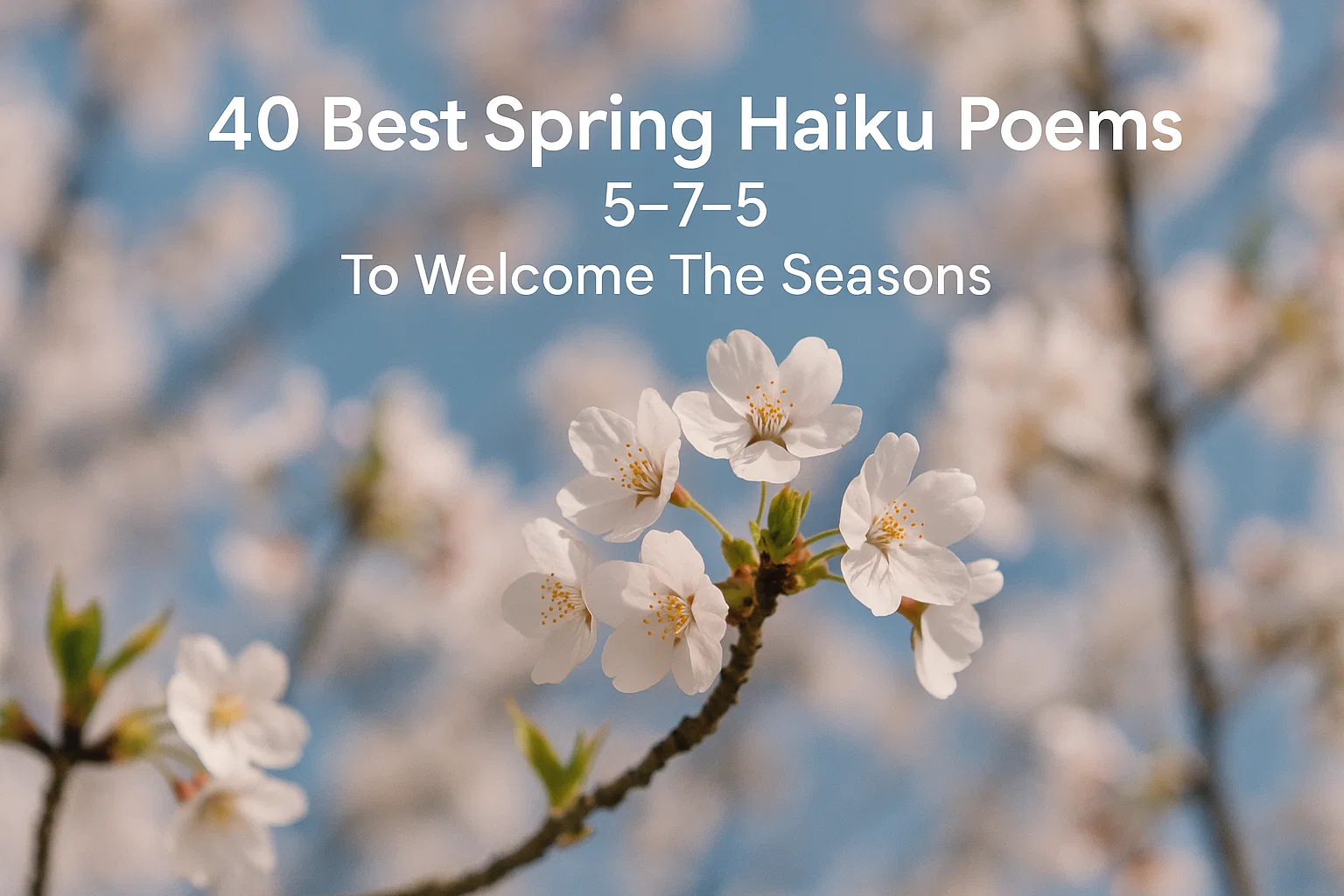
There is this specific moment in mid-March that always catches me off guard. It usually happens on a Tuesday, for some reason. I’ll be standing in my kitchen, waiting for the coffee to drip, staring out at the dogwood tree in our backyard. For months, that tree has looked like a skeleton—just gray, brittle bones scratching against the sky. It looks dead. Honestly, the whole world looks dead.
Then, I blink. And suddenly, there it is. A tiny, almost imperceptible fuzz of green.
It’s not even a leaf yet. It’s just a suggestion of life. But that split second of realization—that winter has actually loosened its death grip—is the best feeling in the world. I have always loved that moment. As a writer and a busy mom, I often scramble to capture that feeling. I want to bottle it. But let’s be real: sometimes long-form journaling feels too heavy. I don’t have the mental bandwidth for an essay when I’m trying to find missing soccer cleats.
That is why I turn to haiku.
These seventeen-syllable wonders are the perfect antidote to a chaotic life. They force us to slow down. They demand we pay attention to the small stuff. If you are looking for Spring Haiku Poems 5 7 5 to celebrate this shift in the seasons, you have stumbled into the right corner of the internet. I’ve gathered a collection here that speaks to the mud, the blooms, the rain, and the returning birds. These aren’t just words on a page; they are little snapshots of the world waking up.
More in Poems Category
Key Takeaways
- Simplicity is Power: The 5-7-5 syllable structure forces you to focus on specific, vivid imagery rather than rambling.
- Nature as Muse: Spring offers the most dramatic changes (mud! blooms!), making it the perfect subject for beginners.
- Mindfulness: Reading and writing haiku grounds you in the present moment, which we all need more of.
- Accessible Art: You don’t need a PhD in literature to write a moving poem about the season; you just need eyes and ears.
Why Does the Structure of 5-7-5 Captivate Us So Much?
We live in a loud world. My house is loud. Between the dog barking at the UPS guy like he’s an intruder and my kids arguing over whose turn it is on the Switch, silence is a luxury item I can’t afford. This is exactly why the structure of haiku appeals to me, and probably to you too.
The traditional Japanese form is simple math. Three lines.
- Line one: 5 syllables.
- Line two: 7 syllables.
- Line three: 5 syllables.
That’s it. No rhyming schemes to stress over. No iambic pentameter to decode.
Why does this specific rhythm work? I think it mirrors the natural breath. You inhale (5), you pause and observe (7), and you exhale (5). It creates a tiny container for a single image. When we focus on Spring Haiku Poems 5 7 5, we strip away the clutter. We stop trying to explain the “Grand Concept of Spring” and instead focus on one dropping petal or one annoyed robin.
I remember trying to explain this to my daughter when she was struggling with a poetry assignment. She was chewing on her pencil, nearly in tears, trying to write about “Nature.” It was too big. I told her, “Don’t write about Nature. Write about the mud caked on your sneakers.” Once she narrowed her focus, the words just fell out of her. That is the magic of the constraint. It limits your space, which ironically expands your creativity.
Can We Capture the First Signs of the Thaw?
Living in the Northeast, “Early Spring” is often just a polite way of saying “Mud Season.” It isn’t always pretty. Actually, it’s usually gross. The snow melts, revealing brown grass, old dog poop, and soggy earth. But there is a strange beauty in that messiness because it means warmth is coming.
I ruined a perfectly good hallway rug a few years ago during this time. I ran out to check the mailbox in my slippers—bad move—slipped off the pavement, and tracked a boot-load of half-frozen mud right into the foyer. I was annoyed for a solid ten minutes. I was scrubbing the rug, muttering to myself. Then I realized: the ground was soft enough to make mud. The deep freeze was over. I stopped scrubbing and just smiled.
Here are poems that celebrate that messy, miraculous transition:
1. The Meltdown
Snow turns into slush Rivers run down the cold street Boots splash in the gray.
2. First Breath
Cold air softens now Winter loses its tight grip Earth begins to breathe.
3. Hidden Green
Brown leaves on the ground Peek underneath the layers Tiny shoots appear.
4. The Icicle Weeps
Crystal sword drips down Shrinking in the morning sun Puddle on the porch.
5. Morning Frost
White dust on the grass Disappears by almost noon Sun reclaims the day.
What Do the Birds Say When Winter Finally Retreats?
If the melting snow is the sight of spring, the return of the songbirds is the soundtrack. I am not an ornithologist—I can barely tell a finch from a sparrow—but I do have a bird feeder that I defend from squirrels with the ferocity of a gladiator.
There is nothing quite like that first morning when the silence of winter breaks. You hear a chirp, then a call, and suddenly the trees are gossiping again. The robins return, looking plump and serious as they hop across the lawn. The cardinals seem brighter red against the budding green.
According to the Cornell Lab of Ornithology, changes in day length are what trigger birds to sing more in the spring. It is biology, sure, but it feels like a party.
6. The Robin’s Return
Red breast on the lawn Looking for a wiggly worm Welcome back, small friend.
7. Morning Choir
Silence breaks at dawn Music floats from high branches Singing to the sun.
8. Nest Builder
Gathering dry twigs Weaving a safe, warm cradle Life will hatch up high.
9. The Blue Jay
Flash of bright blue wings Screaming at the sleepy cat Boss of the oak tree.
10. Cardinal Pair
Red against the green Whistle sharp and clear today Love is in the air.
How Does the Garden Wake Up from Its Long Nap?
I have a love-hate relationship with gardening. I love the flowers; I absolutely hate the weeding. But the anticipation of the first bloom is addictive. I planted daffodil bulbs three years ago along my front walkway. Every April, I check them obsessively, like a watched pot that never boils.
One year, a late frost hit. I remember running outside in my pajamas with old bedsheets, covering the sprouting tulips like I was tucking them into bed. My neighbors probably thought I had lost my mind. I probably looked like a ghost flailing around in the dark. But saving those blooms mattered. When you write Spring Haiku Poems 5 7 5, you try to protect that fragility in words.
11. The Brave Crocus
Purple pushes through Snow still lingers on the ground Brave little flower.
12. Golden Trumpets
Daffodils stand tall Yellow heads nod in the breeze Calling out hello.
13. Tulip Cup
Petals closed so tight Holding onto morning dew Open for the sun.
14. Cherry Blossom Snow
Pink clouds on the trees Wind blows soft and shakes them loose Petals dance like snow.
15. The Lilac Bush
Sweet scent fills the air Tiny purple stars in bunch Perfume for the wind.
Is There Anything Greener Than a Fresh Leaf?
We forget how many shades of green exist until April arrives. In the summer, the green is deep and uniform, almost boring. In the autumn, it vanishes into orange and brown. But in the spring? It is neon. It is lime. It is chartreuse. It is a green so bright it almost hurts your eyes.
I call it “baby green.” It’s that translucent color of a leaf that has just unfurled from its bud. It hasn’t been hardened by the July sun or eaten by August beetles yet. It is perfect. It’s the color of new beginnings.
16. Unfurling
Tight fist of a bud Slowly opens to the light New leaf is born now.
17. Canopy of Light
Sunlight filters down Through the lace of brand new leaves Dappled shade below.
18. The Willows Weep
Long branches hang low Turning yellow, turning green Dancing over streams.
19. Grass Blade
Sharp and vibrant blade Pushing up through heavy soil Carpet for our feet.
20. Forest Floor
Ferns unroll their heads Moss creates a velvet path Soft place to walk on.
Why Do We Feel Such Hope When the Season Changes?
Spring isn’t just biological; it’s deeply psychological. We scrub our houses. We open windows. We declutter closets that we ignored all winter. There is a sense of shedding the old skin.
I recall a particularly tough year for my family. We had dealt with illness and job stress throughout the dark months. I felt heavy, physically and emotionally. Then, one Tuesday, I drove with the windows down for the first time in six months. The air smelled like wet dirt and rain. I felt a physical weight lift off my chest. It was like I could finally breathe again.
Haiku captures that emotional pivot. It connects the outer landscape with our inner landscape.
21. Cleaning Day
Open windows wide Let the stale air drift away House feels fresh and new.
22. Starting Over
Winter is behind Page is turning over now Story starts again.
23. Light Returns
Days are stretching out Darkness waits a little more Sunlight stays for tea.
24. Hope Floats
Like a seed in dirt Hope is waiting for the rain Ready to break through.
25. Winter Coat
Hang it in the back Heavy wool is done for now Shoulders feel so light.
What About the Rain that Brings the Flowers?
You cannot have a list of Spring Haiku Poems 5 7 5 without mentioning the rain. April showers bring May flowers, as the saying goes. But the rain itself is poetry.
There is a huge difference between a cold, miserable November rain and a spring shower. Spring rain smells different. It hits the pavement and releases that scent of ozone and earth (petrichor). My kids used to love stomping in puddles when they were toddlers. Now that they are older, they run to avoid the drops to save their hair, but I still like to stand on the porch and watch the storm roll in.
26. April Shower
Clouds turn dark and gray Thunder rumbles in the sky Water feeds the roots.
27. Puddle Jump
Boots jump in the splash Water flies up in the air Children laugh and scream.
28. Gentle Mist
Soft and quiet rain Kissing every thirsty leaf Drinking up the life.
29. After the Storm
Clouds pull back again Rainbow paints a curve above World is washed and clean.
30. Umbrella Dance
Mushrooms made of cloth Bobbing down the busy street Colors in the rain.
Can You Spot the Critters Coming Out to Play?
It isn’t just the birds. The whole insect world wakes up. The bees start their work. The butterflies return. Even the squirrels seem more energetic, chasing each other across the power lines like circus acrobats.
I have a small pond in my backyard—well, it’s a plastic tub I dug into the ground, but let’s call it a pond. The return of the frogs is a major event. Their peeping keeps us awake sometimes, but it’s a happy noise. It means the water isn’t frozen anymore.
31. The Busy Bee
Fuzzy stripes of gold Landing on the clover flower Working hard all day.
32. Butterfly Wings
Painted stained glass art Fluttering on gentle breeze Landing without sound.
33. Spring Peeper
Tiny frog so loud Singing in the darkest night Calling for a mate.
34. Squirrel Chase
Running up the tree Chasing tails around the trunk Playing tag softly.
35. Ladybug Luck
Red shell with black spots Crawling on a garden leaf Bring good luck to me.
How Do We Say Goodbye as Summer Approaches?
Late spring is a different animal entirely. The air gets heavier. That delicate “baby green” darkens into a serious forest green. The tulips fade, and the peonies and roses take over. You can feel the heat building up in the pavement.
This is the transition into summer. We start thinking about beach trips, sunscreen, and barbecues. The delicate nature of early spring hardens into something more robust. It’s bitter-sweet, honestly.
36. Heat Waves
Sun is getting hot Shade is where I want to be Summer is coming.
37. Dandelion Puff
White and fluffy seed Blow it hard and make a wish Fly away so far.
38. Strawberry Sweet
Red and juicy fruit Picking in the warm sunlight Sticky fingers now.
39. Longest Day
Sun stays up so late Fireflies begin to glow Stars are waking up.
40. Season’s End
Spring waves a goodbye Passing torch to summer sun Cycle starts anew.
Ready to Pick Up a Pen and Try It Yourself?
Now that you have read these forty examples, why not write your own? You don’t need a Moleskine notebook or a quiet study with a view of the Alps. I write most of my ideas on the back of grocery receipts or in the notes app on my phone while waiting in the carpool line.
The process is simple. Look around you right now. Find one thing—a crack in the sidewalk with a weed growing out of it, a bird on a wire, a cloud shaped like a boat.
Count it out on your fingers. Line 1: 5 syllables. Line 2: 7 syllables. Line 3: 5 syllables.
Don’t worry about being profound. Just be honest. Did the wind feel cold? Was the flower bright? Did the mud ruin your favorite shoes? That truth is where the poetry lives.
Why Should We Teach These Little Verses to Our Kids?
I mentioned my daughter earlier, but I really believe haiku is the perfect gateway to poetry for all children. It removes the intimidation factor. A sonnet looks scary; three lines look manageable.
It teaches syllable awareness, which helps with reading. It teaches vocabulary. But most importantly, it teaches observation. In a world of screens and constant stimulation, asking a child to stare at a ladybug for two minutes and describe it is a radical act of mindfulness.
So, go outside. Take a deep breath of that fresh, thawing air. Look for the green. And see if you can catch the season in seventeen syllables.
FAQs
What is the significance of the 5-7-5 syllable structure in haiku poetry?
The 5-7-5 syllable structure in haiku poetry mirrors the natural rhythm of breathing and helps focus on vivid, specific imagery by limiting the space for expression, thus encouraging mindfulness and simplicity.
Why is nature a common theme in spring haiku poems?
Nature is a common theme in spring haiku because the season offers dramatic changes such as blooming flowers, melting snow, and returning birds, providing rich inspiration for capturing fleeting moments of renewal.
How does writing haiku help in cultivating mindfulness?
Writing haiku encourages paying close attention to small details and present-moment awareness, grounding the writer in the here and now, which enhances mindfulness and appreciation for everyday experiences.
What is the emotional impact of observing the change of seasons through haiku?
Observing seasonal changes through haiku creates a sense of hope and renewal, connecting outer landscapes with inner emotions, and often leading to feelings of uplift and psychological cleansing.
How can beginners start writing their own haiku about spring?
Beginners can start by observing their surroundings, choosing one simple image or moment, and then expressing it in three lines with 5, 7, and 5 syllables, focusing on honesty and vivid detail rather than complexity.